Daytime Activity
Ranthambore's tigers are unusually diurnal, often resting near water through midday heat and moving actively at dawn and dusk — the best windows for a safari sighting.
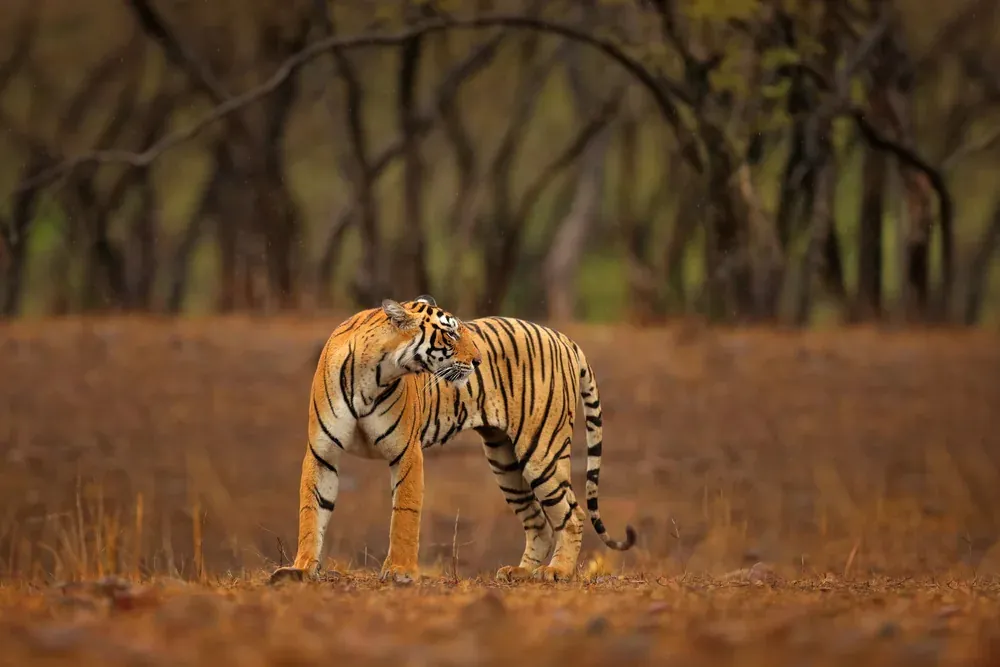
Home to Rajasthan's most storied tigers, Ranthambore pairs dry deciduous forest and ancient ruins with some of India's most reliable big cat sightings and a birdlife list that runs past 300 species.
Spread across the rugged Aravalli-Vindhya hills of eastern Rajasthan, Ranthambore National Park is one of India's finest examples of dry deciduous forest wildlife. The park is best known for its Bengal tigers, but its habitats — lakes, grasslands, rocky escarpments and forest interspersed with the ruins of a 10th-century fort — support over 40 species of mammals, more than 300 bird species, and a healthy population of reptiles and amphibians. This mix of predator, prey and habitat diversity keeps the park's ecology in balance. Ranthambore's protected status under Project Tiger, its accessibility, and its unusually high tiger visibility make it one of India's premier wildlife destinations, drawing photographers and wildlife enthusiasts from across the world.
Ranthambore's most famous resident, and the reason most visitors come.
The Bengal tiger (Panthera tigris tigris) is Ranthambore's flagship species and its main ecological driver. Built for ambush hunting in dry forest, tigers here favour lake edges and grassland clearings, patrolling territory with a solitary, largely daylight-visible pattern that has made this park globally known for tiger sightings.
Ranthambore's tigers are unusually diurnal, often resting near water through midday heat and moving actively at dawn and dusk — the best windows for a safari sighting.
Zones 2, 3, 4 and 5 hold the most productive tiger territories, centred on lakes and open grassland where sighting probability stays consistently high through the season.
A park built on far more than one species.
While the tiger draws the crowds, Ranthambore's ecosystem runs on a wider cast — elusive smaller cats, grazing herbivores, competing carnivores and a strong reptile population — all interlinked in a forest that has supported wildlife for centuries.
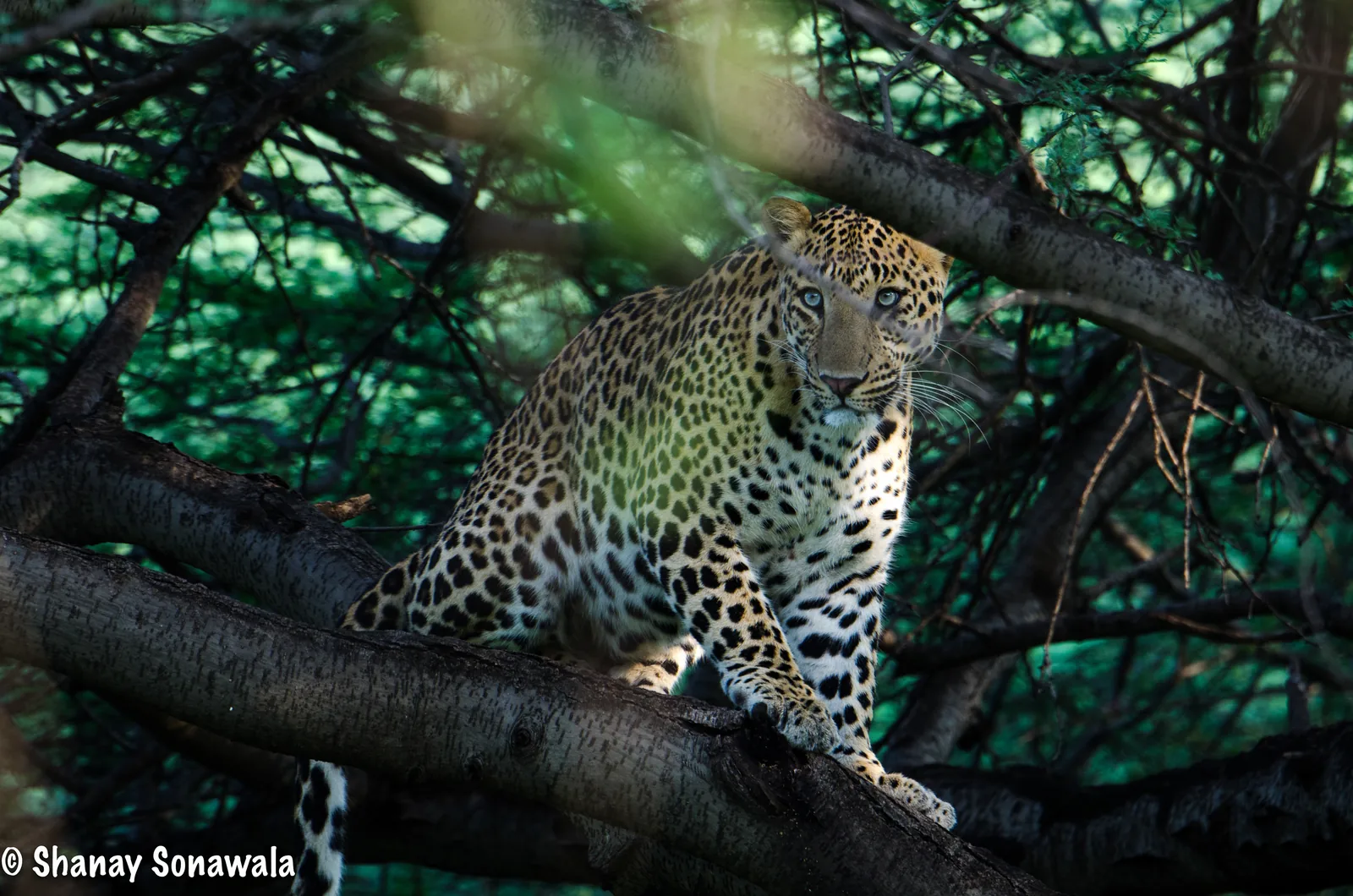
Leopards, jungle cats and the rare caracal share this landscape, staying largely nocturnal and forest-bound to avoid tiger territory, making them some of the hardest sightings in the park.
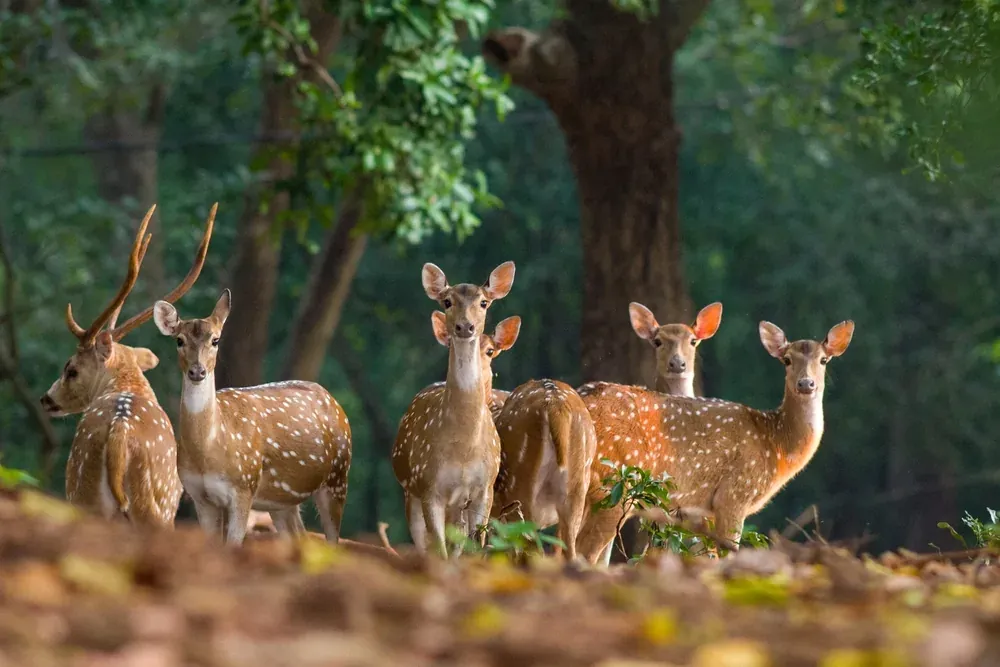
Sambar, chital and nilgai form the base of the food chain, grazing lake edges and grassland — and providing the prey base that sustains Ranthambore's predators.
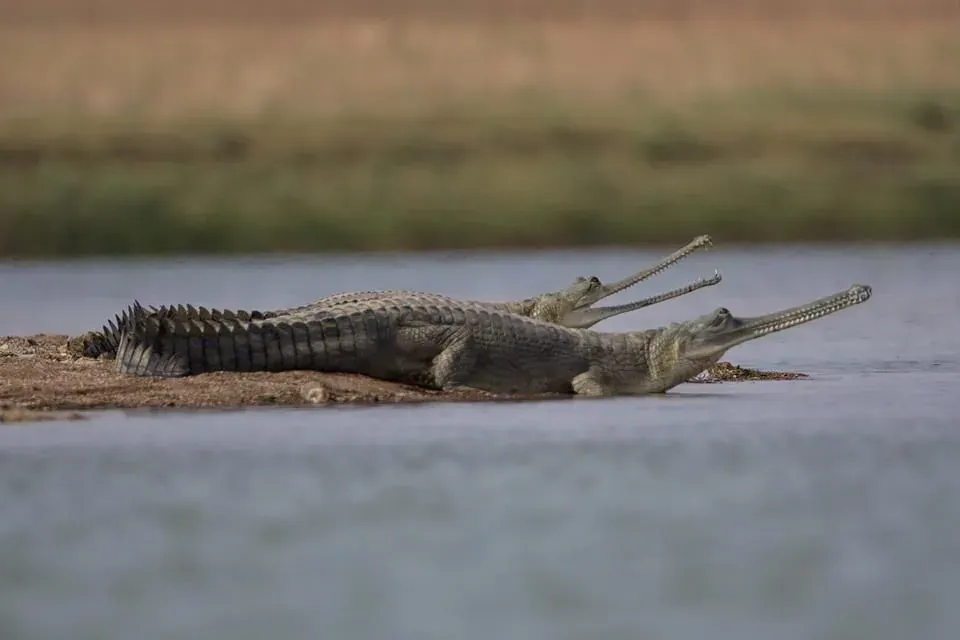
Striped hyenas, jackals and sloth bears round out the carnivore guild, while marsh crocodiles, monitor lizards and rock pythons anchor the park's reptile life around its lakes.
More wild cat diversity than most visitors expect from a single reserve.
The carnivore guild that keeps the ecosystem in check.
The prey base underpinning the park's food chain.
A birdwatching destination as rewarding as its tiger reputation.
Ranthambore's lakes and forest edges support a remarkable range of resident and migratory birds. Waterbirds gather at Padam Talao and Rajbagh through winter, while raptors patrol the open grasslands year-round. For birdwatchers, the park rewards patience with sightings that rival its mammal list, especially between November and March when migratory species peak.
Home to over 300 bird species recorded across its lakes, forests and grasslands.
The Bengal tiger is Ranthambore's most famous resident, alongside leopards, sloth bears and a wide range of deer species including sambar and chital.
The Bengal tiger is the park's flagship species, and Ranthambore is considered one of the most reliable places in India to see wild tigers.
Ranthambore is home to more than 40 species of mammals, ranging from big cats and hyenas to deer, wild boar and langurs.
Zones 3, 4 and 5 are generally considered the most productive for tiger sightings, thanks to their lake-centred territories and open grassland.
Over 300 bird species have been recorded in the park, including painted storks, crested serpent eagles, sarus cranes and migratory waterbirds.
Yes — marsh crocodiles, monitor lizards and rock pythons are regularly seen around the park's lakes and rocky terrain.
October to April offers the most comfortable and productive wildlife viewing, with April to June's dry heat pushing animals toward waterholes for even higher sighting chances.
Yes — its lakes and grasslands make it a strong birdwatching destination alongside its reputation for tiger safaris.
Elusive species like the caracal and rusty-spotted cat are occasionally reported, though sightings remain rare due to their nocturnal, secretive nature.
As a Project Tiger reserve since 1973, Ranthambore has played a central role in Bengal tiger conservation in India through habitat protection and long-term population monitoring.
Ranthambore's forests sit at the meeting point of the Aravalli and Vindhya ranges, producing a dry deciduous ecosystem of dhok trees, open grassland and rocky outcrops threaded through with lakes that anchor almost all major wildlife activity. This habitat mix supports mammals, birds, reptiles and amphibians in numbers unusual for a park of its size, with the tiger sitting at the top of a food chain that runs down through leopards and hyenas to sambar, chital and nilgai. Wildlife movement here shifts with the seasons — animals cluster near water through the dry summer months, spreading into denser forest once the monsoon breaks. Since its designation as a Project Tiger reserve in 1973, Ranthambore has been central to India's tiger conservation story, with decades of monitoring, anti-poaching patrols and habitat management behind its current tiger numbers. Keystone species like the tiger shape prey behaviour and vegetation patterns across the entire park, making its conservation significance felt well beyond its own boundaries. For visitors, this translates into some of the country's most consistent wildlife photography opportunities, paired with a responsible tourism model built around zone rotation and vehicle limits that protect the very wildlife people come to see.
Beyond the tiger, Ranthambore holds a quieter population of smaller wild cats rarely seen by visitors. Leopards persist in the park's rockier, forested fringes, avoiding tiger-dominated territory and staying largely active after dark. Jungle cats hunt rodents and birds through grassland edges, while the rusty-spotted cat and desert cat remain almost entirely nocturnal, sheltering in dense scrub by day. The caracal, though rarely confirmed, is occasionally reported in the park's drier zones. These species matter ecologically as mid-level predators, controlling rodent and small mammal populations that would otherwise strain vegetation. Their secretive, low-density habits make them some of the most difficult sightings in Indian wildlife tourism — a genuine reward for patient, repeat visitors.
Ranthambore's herbivore community forms the foundation its predators depend on. Sambar, the largest deer in the park, graze near lake edges and are frequently the first alarm-callers on a tiger's approach. Chital move in large herds across open grassland, while nilgai and chinkara favour drier, scrubbier terrain. Wild boar root through forest floor litter, aiding seed dispersal and soil turnover. Populations shift seasonally, concentrating around water sources in summer and dispersing more widely after the monsoon. Beyond sustaining predator numbers, these species shape the park's vegetation structure through grazing pressure, and their alarm calls remain one of the most reliable tools safari guides use to track tiger movement.
Away from the tiger, Ranthambore's carnivore guild includes leopards, striped hyenas, golden jackals and sloth bears, each occupying a distinct ecological niche. Hyenas and jackals largely scavenge but also hunt small prey, helping clear carcasses and limit disease spread. Sloth bears, though not strict carnivores, are opportunistic and occasionally compete with other predators for resources. Competition among these species is shaped heavily by tiger presence, which restricts smaller carnivores to marginal territory and activity windows. This layered predator structure keeps prey populations in check and prevents any single species from destabilising the ecosystem, making carnivore conservation here as important as tiger protection itself.
Ranthambore's lakes and rocky terrain support a strong reptile population that often goes unnoticed beside the park's mammal sightings. Marsh crocodiles bask along Padam Talao and Rajbagh, sometimes visible resting near tiger territory. Monitor lizards move through both forest floor and lake edges, while Indian rock pythons shelter in rocky crevices near water. Cobras and various vipers inhabit the drier scrub zones, playing an important role in rodent control. Turtles are present in the park's lakes in smaller numbers. Collectively, these reptiles help regulate prey populations at a smaller scale and indicate overall wetland health, making them a quietly essential part of Ranthambore's ecosystem.