Flora in Ranthambore National Park constitutes one of northern India's most intact examples of northern tropical dry deciduous forest, a biome that thrives on seasonal extremes — monsoon abundance followed by summer drought. The park's 1,334 sq. km sit at the confluence of the Aravalli and Vindhya hill systems, a unique geographic meeting point that creates a mosaic of micro-habitats: rocky ridges, deep valleys, expansive grasslands, riparian corridors, and perennial wetlands. This heterogeneity directly translates into botanical diversity, with over 539 plant species recorded across the landscape.
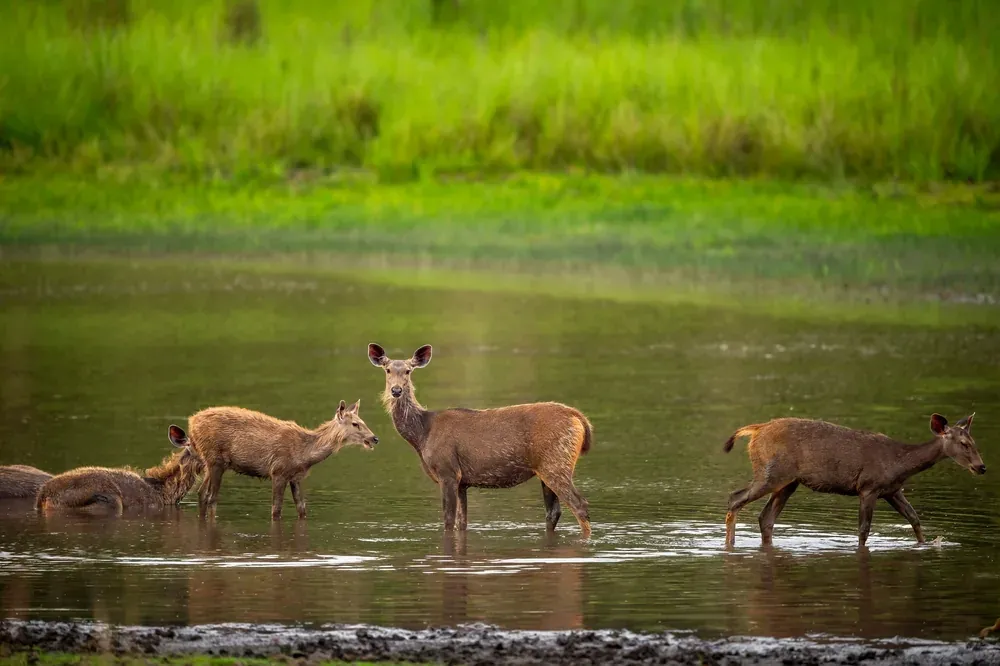
The vegetation zones are clearly stratified. Dense Dhok-dominated forests occupy the upper ridges and mid-slopes, forming the dominant canopy. Lower slopes and valley floors transition to more mixed communities, where Banyan, Mahua, Tendu, and Salar appear alongside thorny Babul and fruiting wild figs. Grasslands fringe the waterbodies and old ruins, providing critical grazing habitat for cheetal, sambar, and nilgai — the prey base that supports Ranthambore's tigers.
Seasonal transformation is one of the park's most dramatic ecological phenomena. After the monsoon (July–September), the forest turns a lush deep green, with humidity bringing ferns, mosses, and climbers to life. By winter (October–February), the canopy thins and the Palash begins to bud. Spring (February–April) ignites the park in orange and red, as Flame of the Forest blooms before leafing. By peak summer (April–June), much of the Dhok forest becomes bare and skeletal — paradoxically ideal for tiger sightings as vegetation cover drops and wildlife concentrates near water.
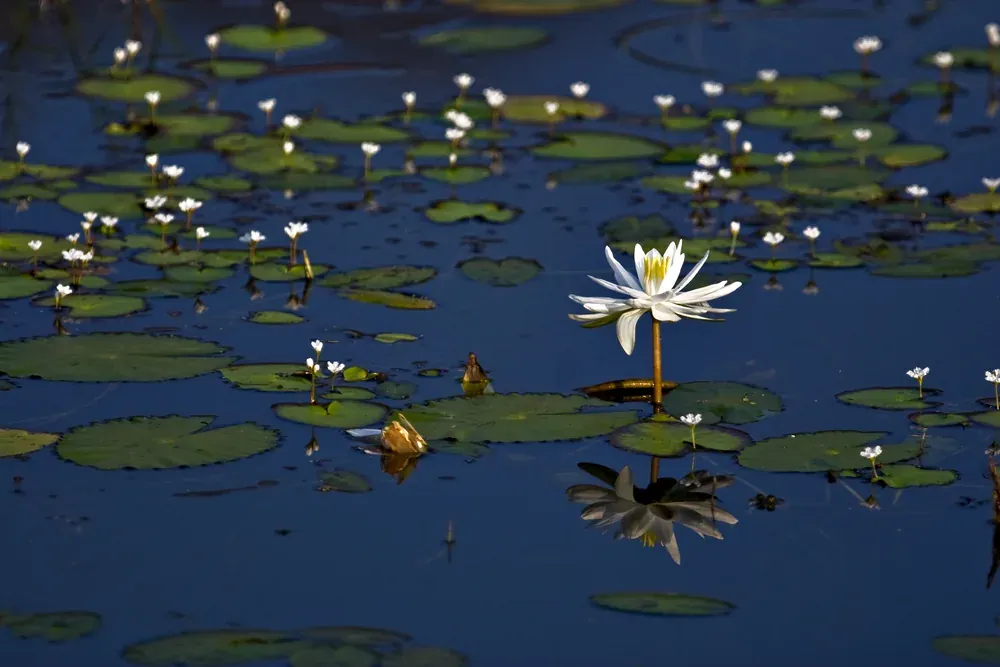
Plants and animals at Ranthambore exist in a web of mutual dependence. Fruiting trees such as Gular, Ber, and Mahua sustain langurs, bears, and deer throughout the lean season. Hollow Banyan trunks shelter owlets and civets. Dhok's leaf litter feeds invertebrates that nourish ground birds. Grasslands maintained by large herbivores in turn prevent scrub encroachment. Aquatic plants in the lakes anchor the food chain for fish, which feed otters, storks, and river terns. Removing any layer of this botanical web would cascade through every species above it.
From a conservation standpoint, native vegetation integrity is non-negotiable. Several plant species in Ranthambore — particularly Boswellia serrata (Salai) — are under pressure from bark-tapping and oleo-gum resin extraction. Invasive species such as Lantana camara form thickets that outcompete native understorey plants and reduce forage availability for herbivores. Active management, controlled burns, and restoration of native grasses are ongoing conservation priorities. The flora in Ranthambore is not merely scenery — it is the structural and nutritional foundation upon which the entire ecosystem stands.
Dhok Anogeissus pendula
Keystone Tree — the forest's dominant canopy species
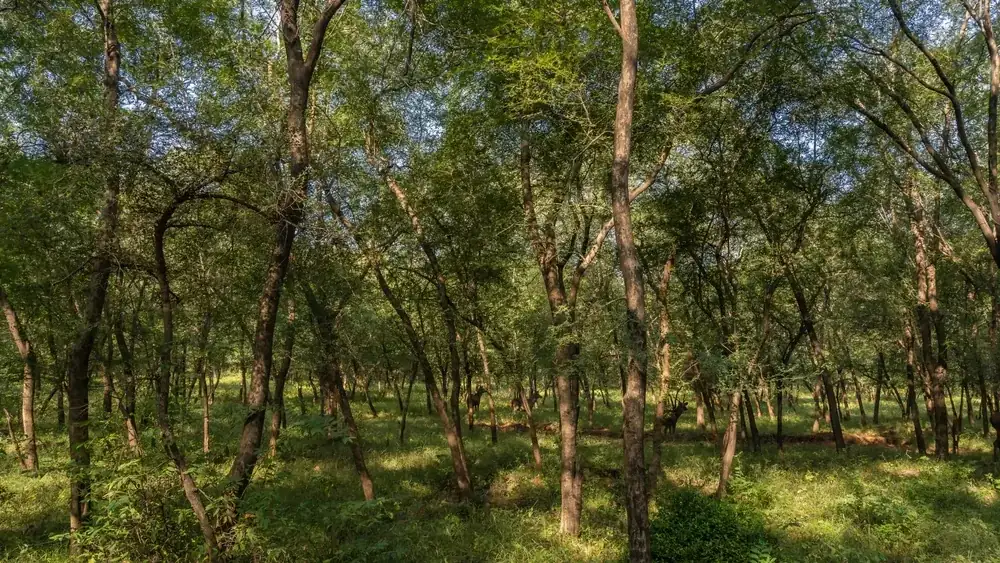
Dhok is the ecological cornerstone of flora in Ranthambore National Park, blanketing an estimated 60% of the total forest cover. This medium-sized deciduous tree is instantly recognisable by its smooth, pale grey bark and distinctively pendulous — drooping — branch tips, an adaptation that reduces wind damage on exposed Aravalli ridges. Dhok is extraordinarily drought-tolerant, drawing water from deep rocky soils through an extensive root system that also prevents erosion on steep hillsides. Its leaf litter decomposes into nutrient-rich humus, feeding the soil biology that sustains the entire forest floor community. During the lean summer months, when most trees are bare, Dhok provides the skeletal structure of the forest and harbours insects under its bark — a foraging resource for woodpeckers, treecreepers, and bee-eaters. For wildlife managers, the health of the Dhok stand is an indicator of overall forest quality.
Forest Cover~60% of park
AdaptationDrought-tolerant
Banyan Ficus benghalensis
Ancient Canopy — a living, self-expanding grove
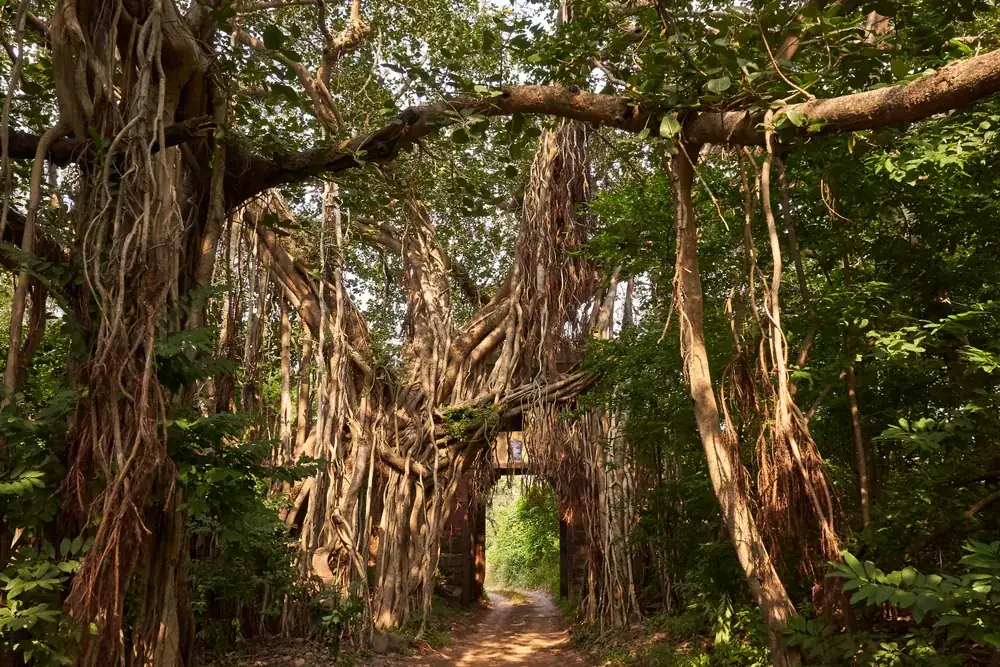
Few trees in India inspire as much ecological wonder as the Banyan, and Ranthambore's specimens are among the most remarkable in Rajasthan. A single mature Banyan tree is not one organism but many — its trunk continuously sends aerial prop roots down to the soil, each becoming an independent stem over time, until one tree occupies the footprint of an entire grove. Inside Ranthambore, ancient Banyans near the Ranthambore Fort and near Padam Talao create cathedral-like spaces beneath their canopies. The fig fruit of Ficus benghalensis is among the most valuable food resources in the dry season, attracting langurs, sambar, spotted deer, sloth bears, and over 40 species of fruit-eating birds. Bats roost in its prop-root chambers, distributing seeds. Leopards rest on broad horizontal limbs. The Banyan is both a physical structure and a dynamic feeding station woven into the very fabric of Ranthambore's food web.
Key LocationsFort, Padam Talao
Feeds40+ bird species
Flame of the Forest Butea monosperma
Spring Spectacle — blooms before it leafs
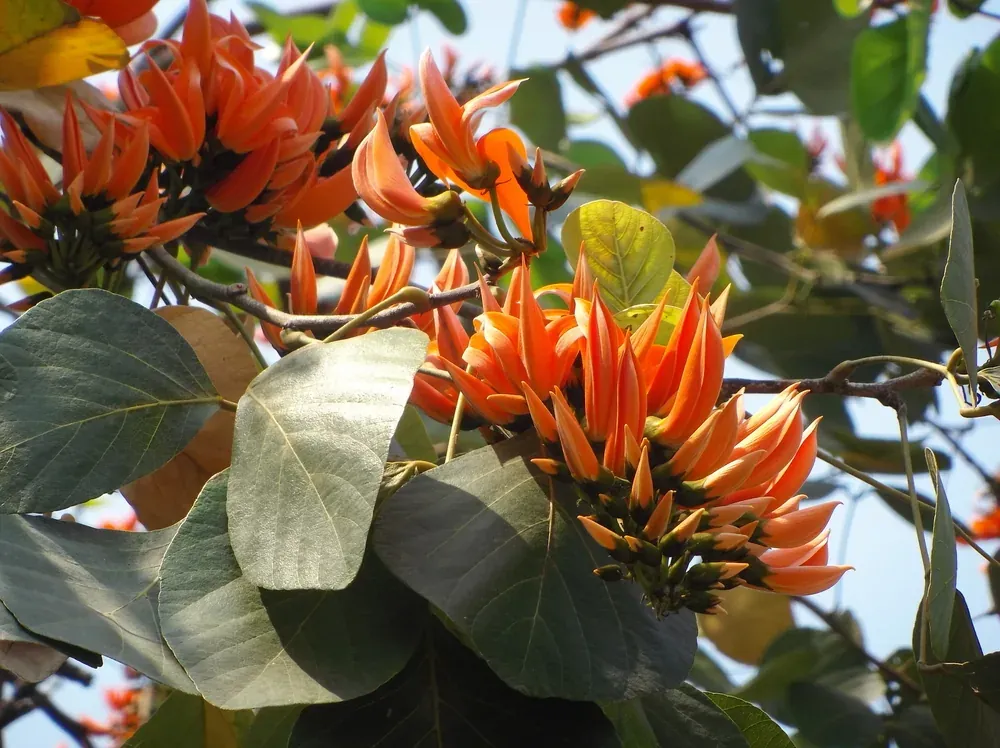
Butea monosperma — locally called Palash or Tesu — is botanically extraordinary: it blooms entirely before producing leaves, so its flowers emerge from bare branches in late January through March, turning the Ranthambore forest into a landscape of living fire. The large, orange-red papilionaceous flowers are rich in nectar and attract sunbirds, barbets, parakeets, and carpenter bees, making Palash one of the most important pollinator-support species in the park during the lean pre-monsoon season. Its compound leaves, once they emerge, are among the largest in the dry deciduous forest, creating generous shade for ground fauna including tortoises, monitor lizards, and jungle fowl. Culturally, Palash is deeply significant: its flowers yield a brilliant natural dye; its bark produces tannin; its roots have documented antimicrobial properties in Ayurvedic practice. In Ranthambore, it is a living intersection of ecology, culture, and spectacle.
Bloom WindowLate Jan – March
Local NamePalash / Tesu
Other Tree Species in Ranthambore National Park
Beyond its three signature species, the plant diversity in Ranthambore National Park reveals a complex, layered ecosystem shaped by geology, rainfall, and centuries of ecological succession. The Tendu tree (Diospyros melanoxylon) is commercially significant and ecologically important: its large, leathery leaves are used to roll beedis — India's hand-rolled cigarettes — and represent a livelihood resource for buffer-zone communities. Inside the core, Tendu fruit sustains sloth bears and fruit bats during the summer dry spell, when other sources diminish.
Indian Gooseberry (Amla, Phyllanthus emblica) is scattered across the park in drier patches, its small, yellow-green fruits a concentrated source of Vitamin C and a critical food for deer, wild boar, and the Bengal fox. Medically revered in Ayurveda, Amla within Ranthambore's protected boundary grows undisturbed, providing seeds dispersed by wildlife across the landscape. Mahua (Madhuca longifolia) is another ecological pillar: its late-winter flowers drop to the ground and are eagerly consumed by bears, nilgai, and sambar, while the fleshy fruit sustains birds. Tribal communities historically collected Mahua flowers for food and fermentation — a practice now restricted within the core zone.
Salar or Indian Frankincense (Boswellia serrata) occupies dry, rocky hillsides where its white-barked trunk and resinous fragrance mark the upper forest edge. Its resin — Shallaki — is commercially valuable as an anti-inflammatory agent, making this species one of the most threatened in the park due to illegal tapping. Babul (Vachellia nilotica), a thorny Acacia dominant on alkaline soils near nullahs and tank margins, provides structural nesting habitat for weaver birds and thorny refuge for ground-nesting species. Its pods are a key winter forage for deer and livestock in buffer areas.
Khejri (Prosopis cineraria), the Rajasthan state tree, appears in Ranthambore's drier western fringes, a marker of the Thar influence on local vegetation. Wild Fig or Gular (Ficus racemosa) produces fruit throughout the year — a botanical rarity that makes it an anchor food source across seasons. Date Palm (Phoenix sylvestris) lines seasonal waterways, its fruit consumed by bears and its crown used by eagle owls for nesting. Dhaman grass (Cenchrus ciliaris) and other grassland species cover open areas near ruins and forest edges, the core grazing resource that ultimately supports the herbivore density needed to sustain Ranthambore's tiger population. Together, this botanical community makes flora in Ranthambore National Park not a backdrop but the engine of one of India's most celebrated wildlife ecosystems.